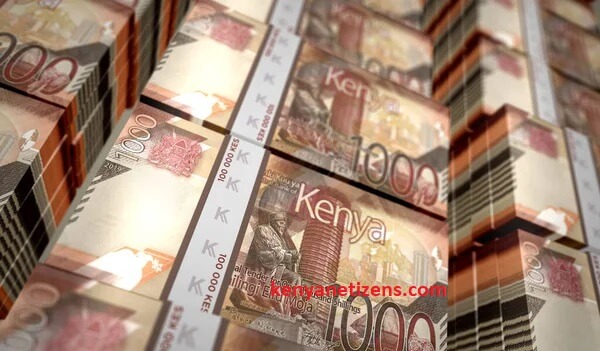
Since July 2021, Kenya has been accruing debt at an average rate of Sh2.5 billion per day and paying it back with Sh2.4 billion per day. According to documents from the National Treasury and the office of the Controller of Budget (COB), the government pays an average of Sh72.4 billion each month to service debts, despite the country borrowing an average of Sh77 billion per month in the current fiscal year.
According to the most recent Treasury figures, Kenya’s public debt as of the end of April this year was Sh8.47 trillion, up from Sh7.69 trillion as of the end of June last year. According to the data, the government borrowed the most money in July 2021 a total of ($116 billion), and the least amount in October 2021 ($42 billion), which works out to about Sh3.7 billion and Sh1.36 billion per day respectively.
The total external debt held by the national government increased from Sh4,209.56 billion in March this year to Sh33.97 billion, this was connected to fluctuations in currency exchange rates. The bilateral creditors’ debt was reduced by Sh11.7 billion from Sh1,097.98 billion to Sh1,097.70 billion, while multilateral creditors’ debt increased by Sh60.4 billion to Sh1,817.37 billion.
From Sh1,134.3 billion in the same period, commercial debt declined by Sh11.24 billion. According to the Treasury’s monthly debt report for April 2022, government guaranteed external debt slightly dropped from Sh159.9 billion in March 2022 to Sh156.39 billion. Also, the US Dollar value to Kenyan Shilling has been depreciating over the past months.
According to the Controller of Budget, the government spent a total of Sh651.7 billion between July 2021 and March 2022 repaying debts, with loan interest accounting for 65.2% of the total. This cost was divided into Sh226.6 billion for principal redemption and Sh425.09 billion for interest payments.
The sum of Sh237.58 billion used to service external debt was split between principal and interest payments totaling Sh144.72 billion. The COB report on national government budget implementation between July and March shows that the overall domestic debt payment was Sh414.15 billion, consisting of Sh81.92 billion for principle and Sh332.23 billion for interest payments.
The current government under the leadership of Uhuru Kenyatta borrowed a total of Sh1.003 trillion in the 2020–2021 financial year, becoming the first government to borrow more than Sh1 trillion in a single year. These high figures borrowed tend to make Kenyans’ life hard since tax is added to help fasten pay the debt.
The largest cause for concern is that, despite the fact that debt is limiting growth possibilities, there is still no meaningful policy prescription on how to reduce the public debt to the goal level of 55% set by the Finance Act. In 2013 June, when former President Mwai Kibaki handed power to President Uhuru Kenyatta, the government spent Sh282 billion on paying off the nation’s debts.
This amount increased to Sh651.7 billion in the first 10 months of his final year in office, or a 130% increase, meaning that the cost of servicing debts has increased. According to the 2012/13 Controller of Budget report, the total stock of public and publicly guaranteed debt as of the end of June 2013 was Sh1.89 trillion, or 49.5% of GDP; it was composed of Sh1.05 trillion domestic and Sh843.56 billion foreign borrowing.
Over the past nine years, the public debt as a percentage of Gross Domestic Product (GDP) has increased from 49.5% to 68.4% by April 2022. As opposed to Sh958.4 billion in the Financial year 2020/21, the government allocated Sh1.17 trillion in the Financial year 2021/22 for paying down the nation’s debt.