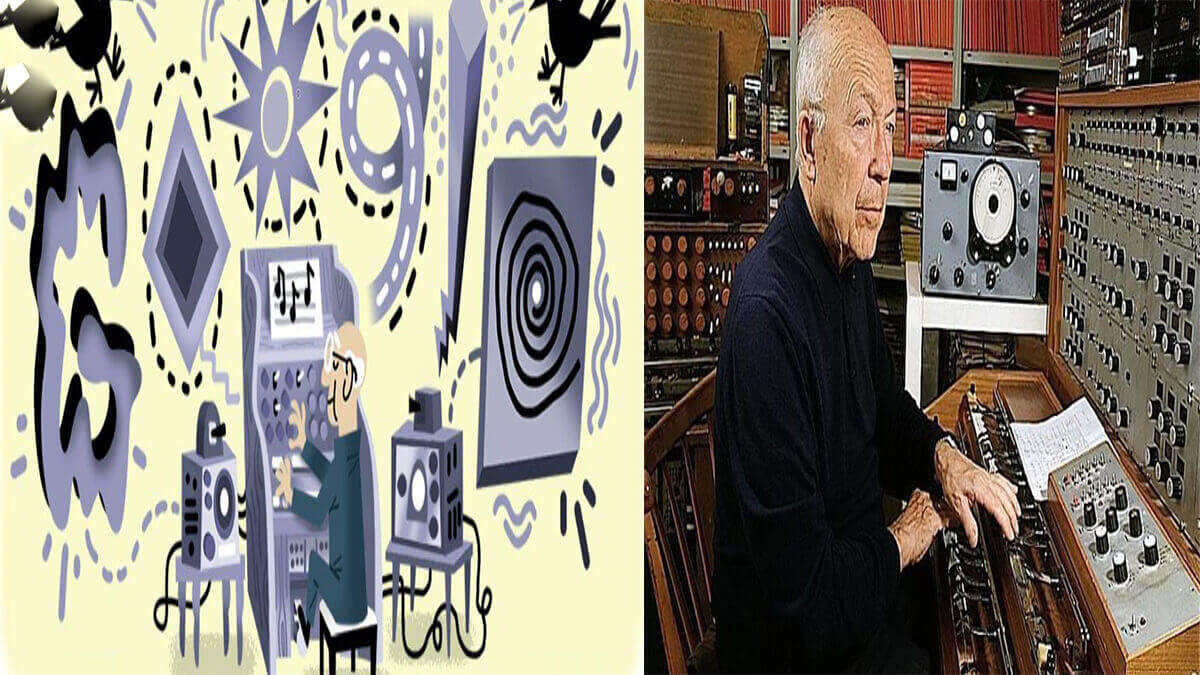
Sala was a German physicist, composer, and pioneer of electronic music who played the trautonium a device that can be considered a forerunner to the synthesizer. Today, July 18, Oskar Sala would have turned 112 years old. He is being remembered in memory of the renowned composer with his very own Google Doodle.
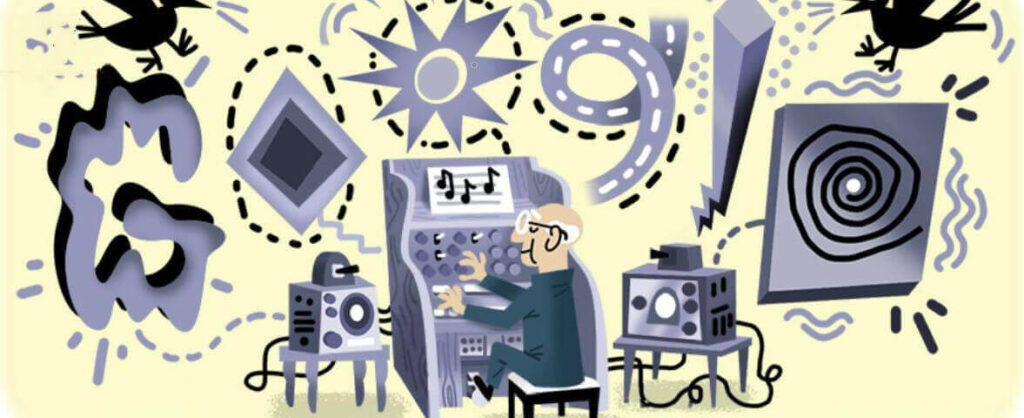
Sala was born on July 18, 1910, in Greiz, Germany, and was surrounded by music because both of his parents were musicians: his father who was an ophthalmologist had musical abilities of his own, while his mother, Annemarie, worked as a singer. Sala began piano and organ studies at a young age. He started doing classical piano performances and writing songs and compositions as a kid. Sala relocated to Berlin in 1929 to study piano and composition with violinist Paul Hindemith.
In Berlin Sala was introduced to Friedrich Trautwein’s work an engineer who was known for developing the trautonium
the possibilities of this invention instantly captured Sala’s interest. He studied physics at the University of Berlin in order to increase the breadth of his knowledge in natural sciences and mathematics while specializing in the advancement of trautonium.
Sala developed the Quartett-Trautonium, Concert Trautonium and the Volkstrautonium. He also developed the mixture trautonium which was so unique and was able to play several sounds at the same time.
Oskar produced several movie soundtracks. In 1958, he opened his own studio at the Berlin-based Mars Film, where he created electronic soundtracks for movies like Different from You and Me in (1957), Rosemary (1959), Das Indische Grabmal (1959) and the Birds (1963. The birds’ film was a non-musical soundtrack produced for Alfred Hitchcock’s.
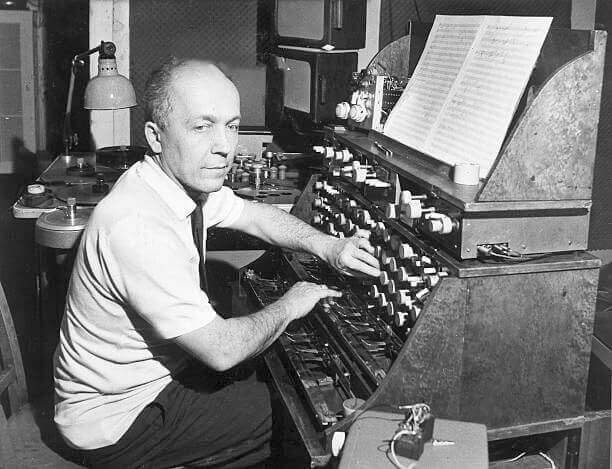
Over the course of his career, Sala won several honors for his compositions, including the Best Music Award at the Industrial Film Festival in Berlin for the score to Der Facher and the Gold Filmband in 1987 for his work on more than 400 films.
He gave his initial mixture of trautonium to the German Museum for Contemporary Technology in 1995, and in 2000 he gave the Deutsches Museum his whole estate. He died on February 26, 2002, in Berlin at the age of 92.